A Love Letter to the Teapot
There are two ways of being given tea in this country. A love letter to the pot that upgrades the visit.
(In which the visit is upgraded, the second cup is secured and Stoke-on-Trent is thanked.)
There are two ways of being given tea in this country. The first is the mug: handed over wherever you happen to be standing, kind, efficient, entirely without ceremony. The second begins with a question, and the question is "shall I put the pot on?", and everything about the afternoon changes as it is asked. You arrived as a caller. You are now a guest. Nobody announces the promotion. The pot is the announcement.
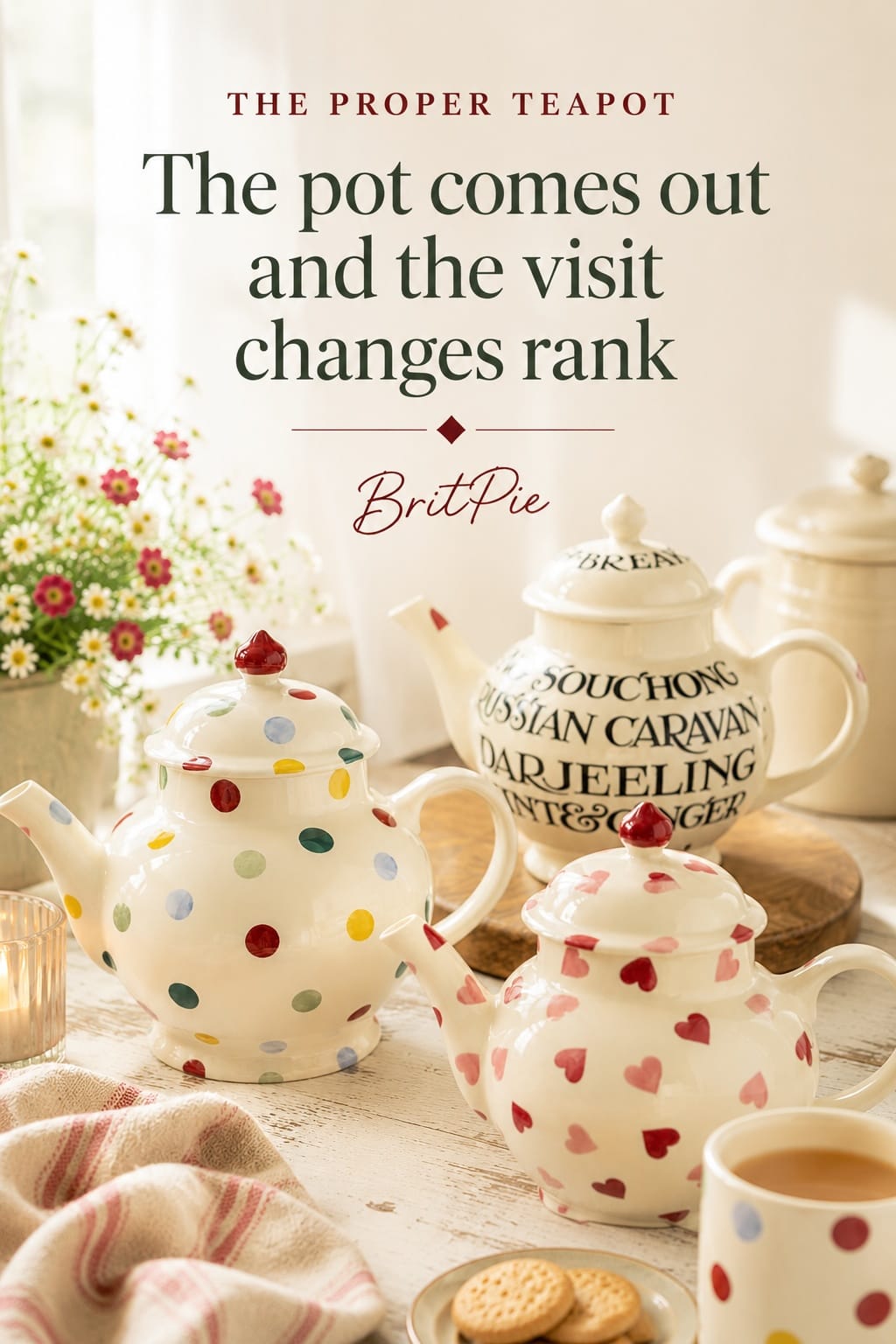
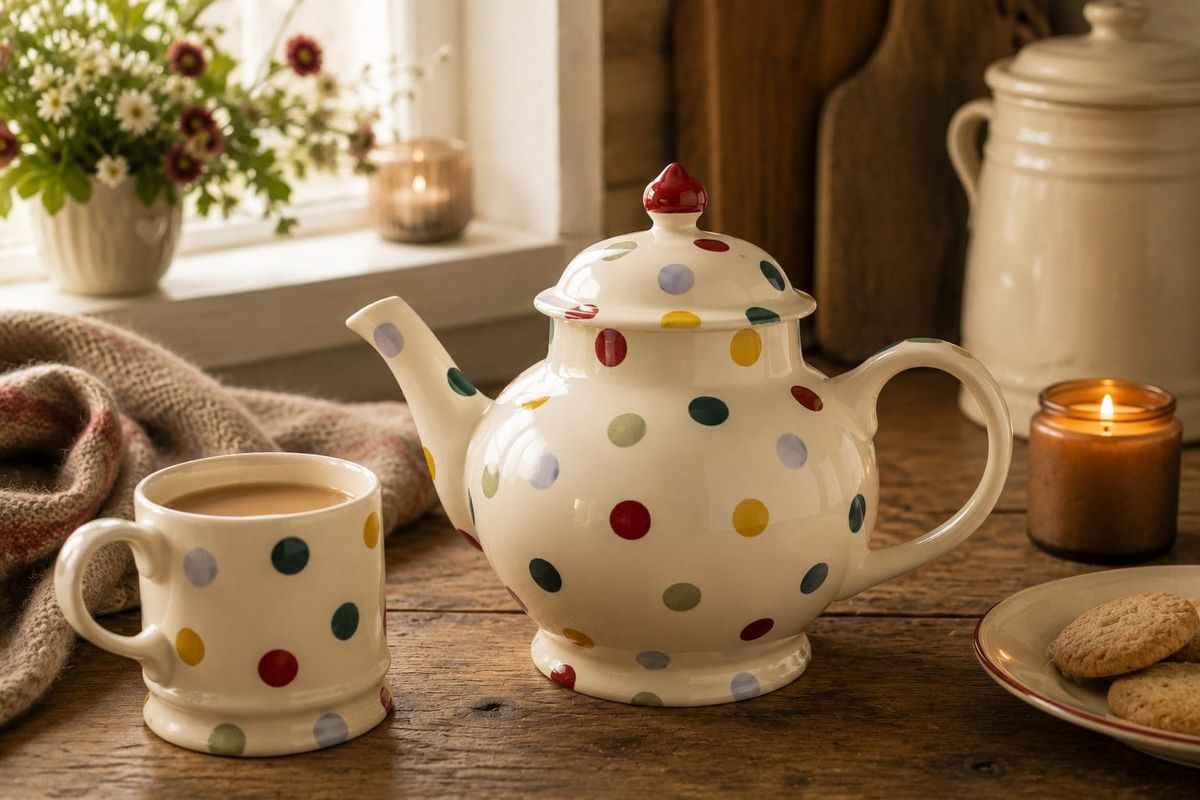
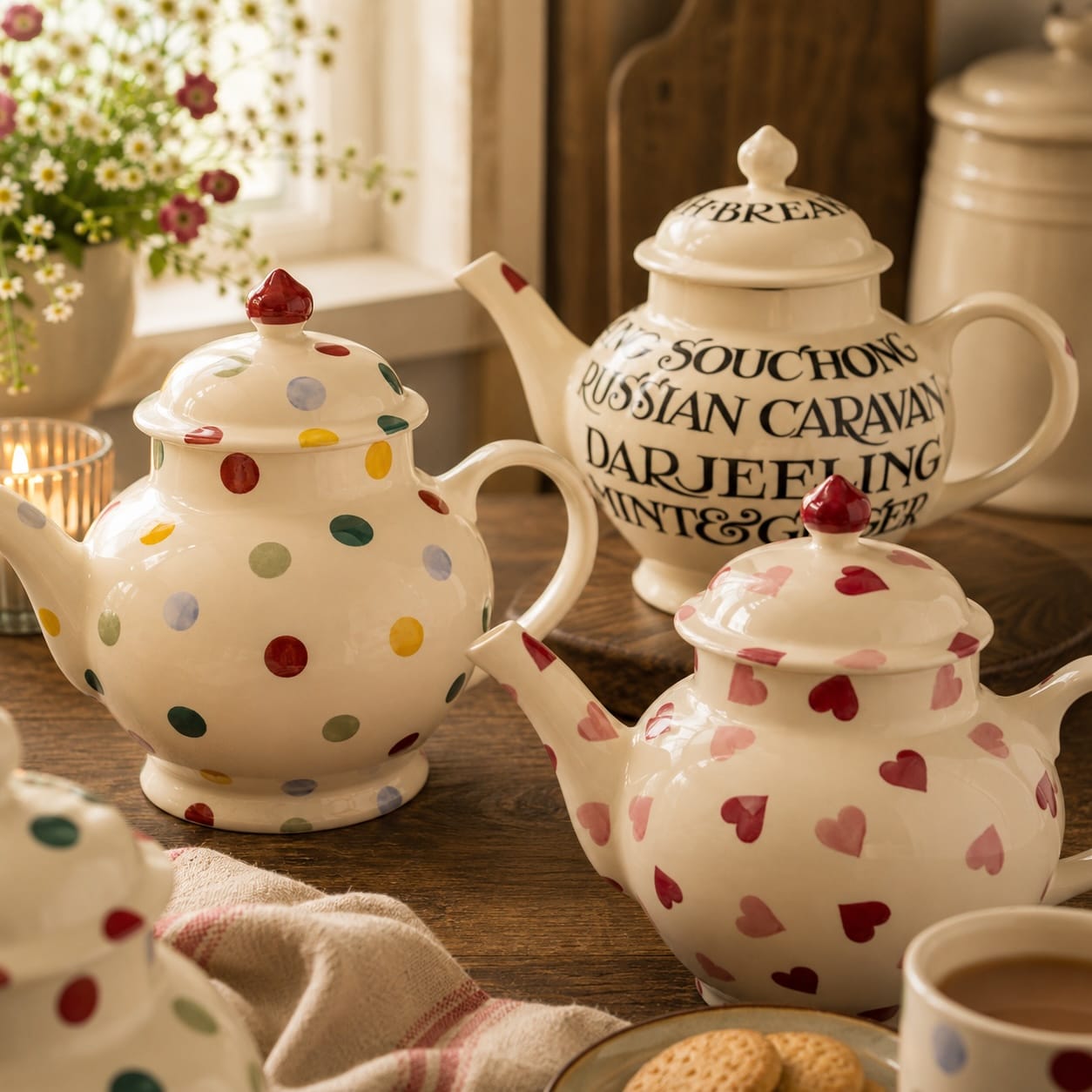
This is a love letter to the teapot, and to one teapot in particular: the Emma Bridgewater pot, made and decorated by hand at their factory in Stoke-on-Trent, in the patterns half the country could draw from memory. Polka Dot. Pink Hearts. Blue Star. Black Toast. The classics are permanent, which matters in a love letter, because there is no point falling for something seasonal.
Start with the facts, because the facts are half the charm. These pots are sized not in pints or litres but in mugs, two-mug and four-mug, which is the only honest way to size a teapot. Nobody has ever wondered how many litres a conversation needs. They are decorated by actual hands in an actual factory in Stoke-on-Trent, the city that has been the answer to "where does the good pottery come from" for longer than anyone needs telling, and the firm's own line is that they are made to be used and loved every day. Not displayed. Used.
Here is what the pot does that no mug can. A mug of tea is a single unit of hospitality. It arrives, it is drunk, and somewhere near the bottom of it the visit begins glancing at its watch. The pot has a middle. The first cup is the weather and the journey over and how the garden is getting on. The second cup is what everyone actually came to say, and it is the pot, sitting there quietly holding another round in reserve, that makes the second cup happen at all. The mug is a drink. The pot is a duration.
Between engagements it earns its keep anyway, up on the shelf in plain sight, the prettiest thing in the room that also works for a living. It is the only object in the kitchen with its own wardrobe, a subject I have covered at length, and what goes into it is settled national policy. The pot itself was the missing letter. I am putting that right.
A word for my American readers: yes, they will post one to you. Emma Bridgewater ships across the Atlantic, and a pot decorated by hand in Stoke-on-Trent arriving on an American doorstep inside a fortnight is, I would argue, the single fastest way to install a British institution in a kitchen. Everything else about the ceremony can be learned. The pot has to be acquired.
And a word about longevity, because this is where teapots differ from nearly everything else you can buy. Nobody replaces a teapot on a schedule. A pot stays until it is dropped, and since the pot is handled with the care its rank commands, most are simply never dropped. They outlast sofas, cars, in some documented cases marriages. Buy one at thirty and there is every chance it pours at your retirement, having presided over every conversation that mattered in between.
So here is to the teapot: rarely the first thing bought for a kitchen, always the thing that makes it finished. It confers rank on guests, holds the second cup in reserve and stands on the shelf between engagements looking like the reason the shelf was built. And here is to the finest domestic sentence in the language, which is not "I love you", though it means approximately that and is far easier to say out loud: shall I put the pot on?
This post contains affiliate links, which means I may earn a small commission if you buy through them, at no extra cost to you. I only recommend things I would genuinely give house room, and the pot has the best spot on the shelf. Full disclosure.
📌 Pin this for later, for the next time someone deserves more than a mug.