Your Christmas Tree Is Not Supposed to Match
A box comes down from the loft and the first thing out of it is a salt-dough star made by a child who is now twenty-four. Every British Christmas tree is an archive rather than a design, and this is what ends up in it.
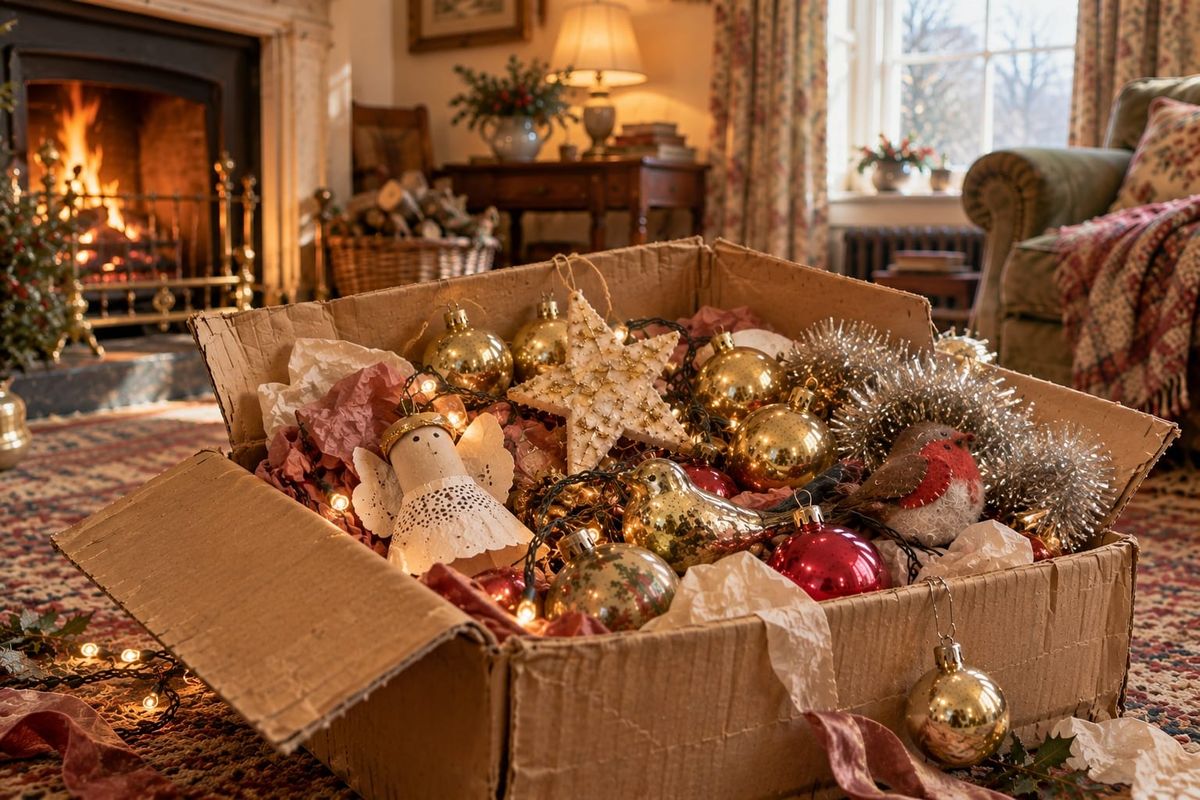
Somewhere in the first fortnight of December, a box comes down from the loft, and the first thing out of it is a star made of salt dough by a child who is now twenty-four. It has lost most of its glitter. One point snapped off in about 2009 and was glued back on at a slight angle, which nobody has ever corrected, because correcting it would mean saying out loud that there is something wrong with it. Nobody is going to say that.
That star goes on the tree. It goes at the front. This is not a decision anyone makes, it is simply what happens, and it happens in a great many houses in this country every single year.
None of which is a British invention, I should say. My dad made a star out of silver tinsel wound round wire when I was small, in a country where the presents arrive on Christmas Eve, brought by the baby Jesus, who manages it with no sleigh, no chimney and no explanation ever offered to anybody. It went wonky within a few years and it stayed wonky, because my sister and I unpacked it first every December and had it on the tree, at the front, before anybody could raise the question. Children are meant to want the new thing. On this one subject we were hardliners, and the star outlasted every shop-bought decoration in the house.
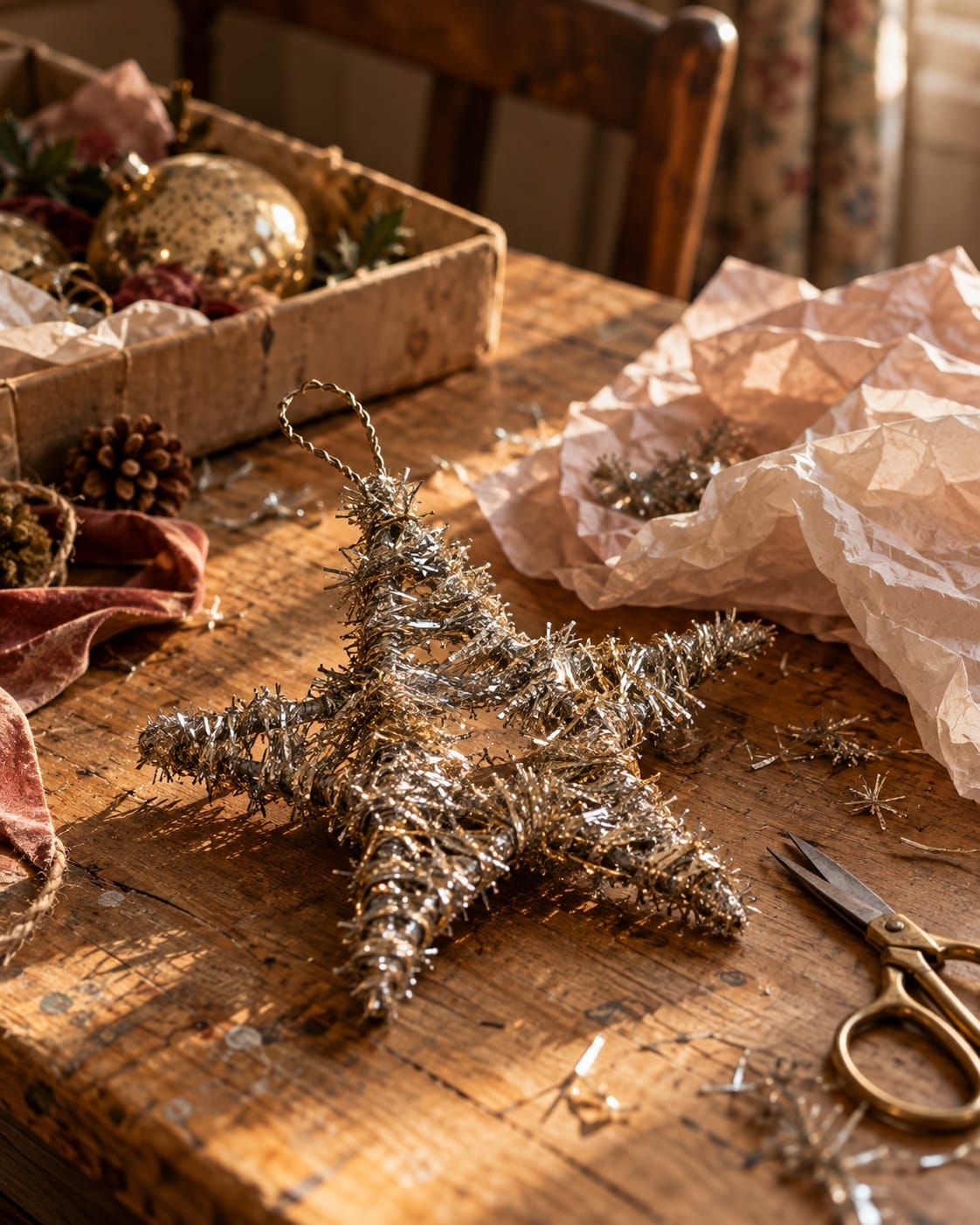
What is actually on a British Christmas tree
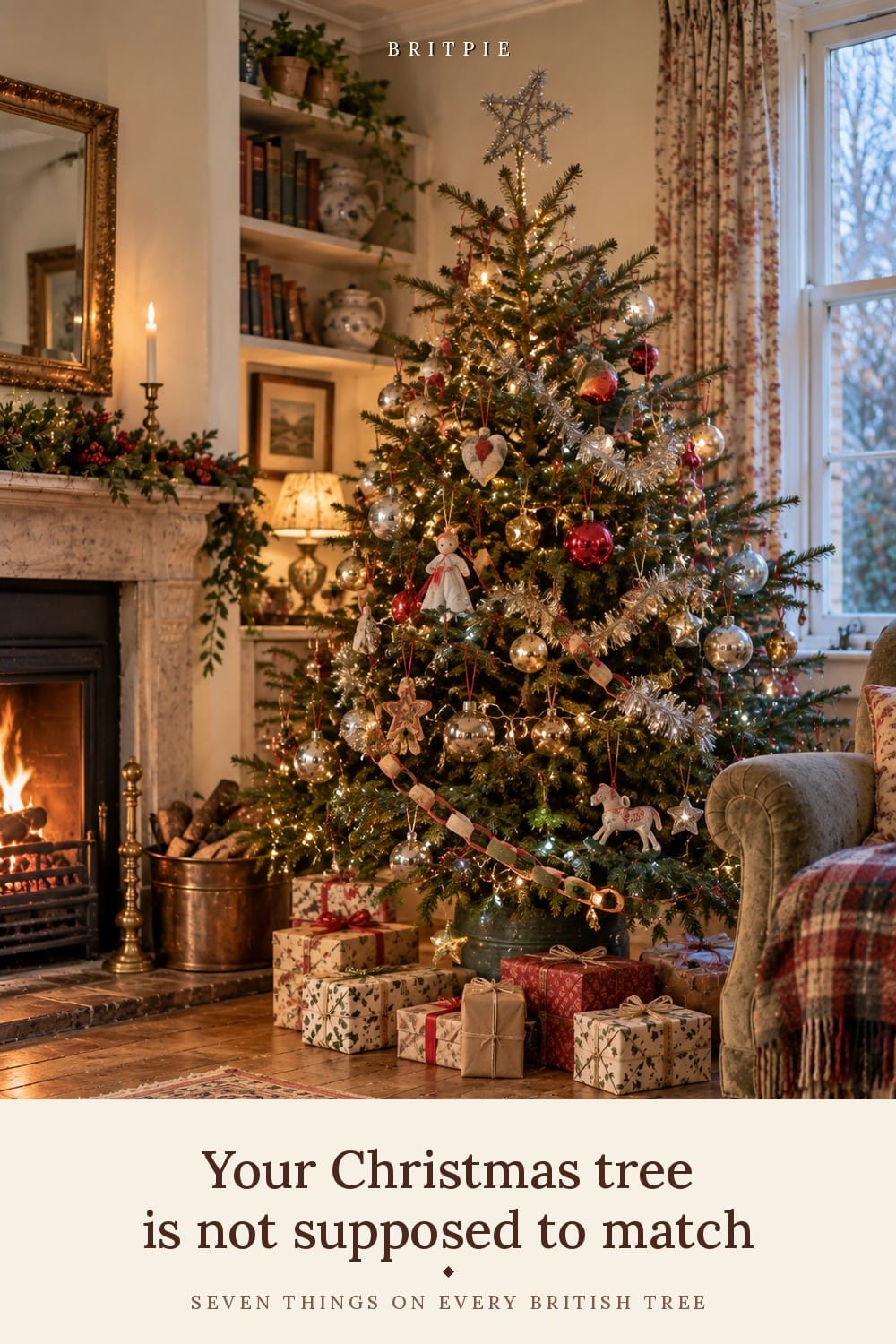
What is on it is not a colour scheme, and it is not a theme either. Themes do exist, obviously, and one can be held for a single year, but the tree is new every December and the box in the loft is not, and it is the box that decides. Give any box five or six years and the same seven categories of object turn up in it, in proportions that vary from one house to the next but in a combination that hardly varies at all. Here they are.
The child's effort. Salt dough, a toilet roll angel, a photograph of a six-year-old stuck to a cardboard circle with the glue showing. Permanent. Unremovable. Will outlive the tree, the house and quite possibly the child.
The holiday one. A painted glass thing from a Christmas market in a city somebody visited in 2011. It is the wrong style for everything else on the tree and it is staying, because it is not really a decoration, it is a souvenir that happens to have a loop on it.
The survivors of the matching set. This is the important category. At some point a household decides to do the tree properly, buys twenty-four coordinated baubles in one afternoon and feels briefly in control of something. By the fourth Christmas there are nine. By the seventh there are five, and two of them have lost their hooks and hang by a bent paperclip.
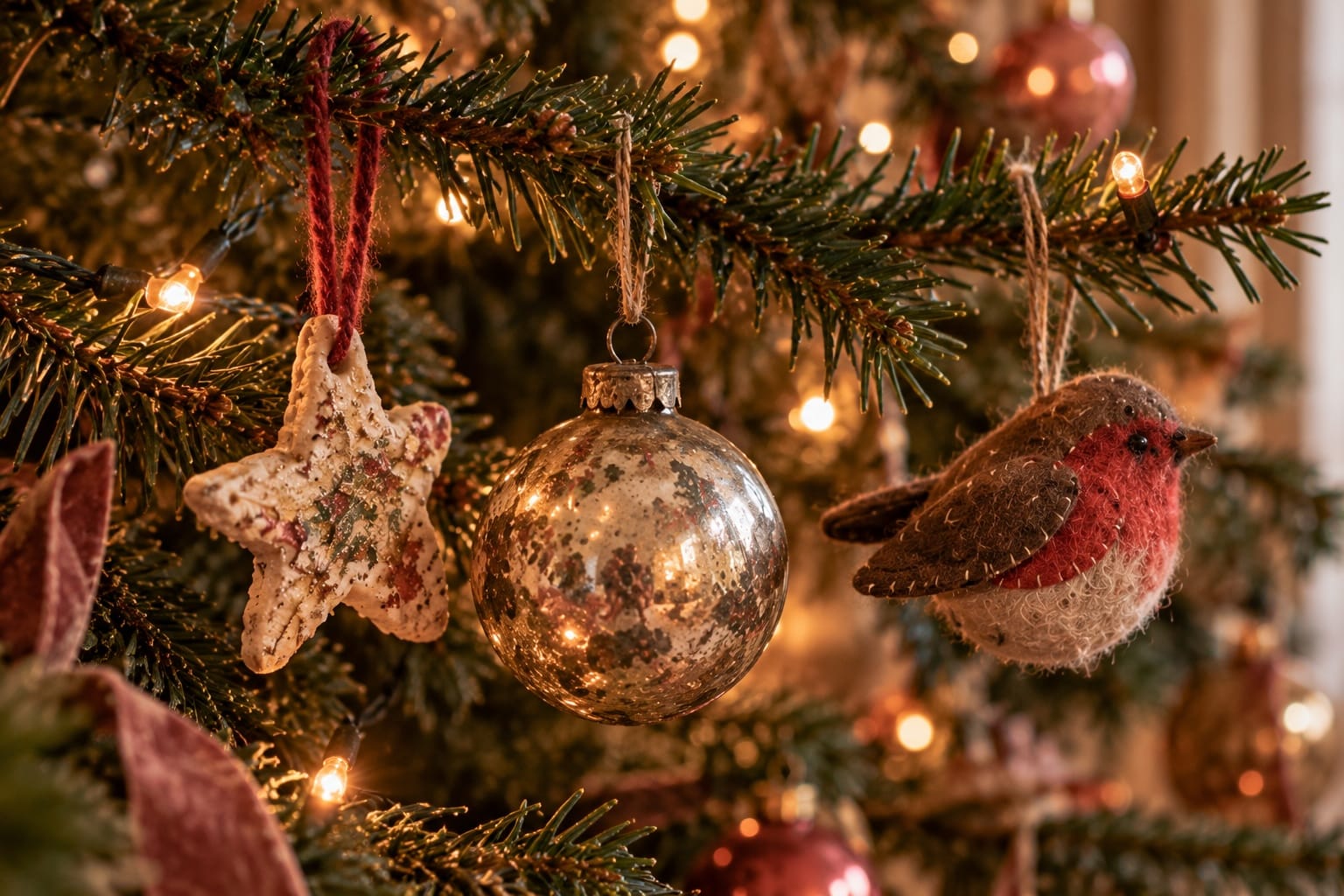
The inherited one. Genuinely old, slightly alarming, from a grandmother. Handled every December with the care normally reserved for unexploded ordnance, and hung at the back where the cat cannot reach.
The one nobody likes. A present, from somebody who visits, and who will look.
The lights. A separate and much worse story. Half a set works, nobody has thrown away a non-working set since 1994, and every year somebody says we should just buy new ones and every year nobody does.
Tinsel. On which households divide along lines that are not negotiable and should not be discussed.
The tree in the photograph
Meanwhile there is the other kind of tree, the one in the magazine and all over Pinterest, where every ornament is the same three colours and the ribbon matches the stockings and the whole thing looks like it arrived in one box, because it did.

It is a beautiful object and it contains no information whatsoever. You cannot tell anything about the people who live there. Nobody made any of it, nobody carried any of it back from anywhere, nobody cried over any of it in 2009. It was bought entire, in an afternoon, in a colour. Everything on it belongs together, which is rather the problem, because nothing has had the chance to become the odd one out.
The tree with the crooked salt-dough star is doing something that tree cannot do. It is legible. You could read a family off it: where they went, what they could afford in which decade, who was born, who died, which year somebody tried to take charge and failed.
That is not a tree that has gone wrong. It is a family history that happens to have fairy lights on it, and the fact that it looks slightly mad is part of the evidence.
What is worth buying
Not a set, to begin with. A set is an attempt to replace an archive with a photograph, and it fails every time, as the five survivors in the loft will confirm.
One thing a year. That is the whole method. One decoration, chosen properly, that goes on the tree this year and then every year after until nobody involved can remember buying it. In fifteen years that is a tree. In two years it is a start.
There are two honest ways to add to an archive, and a third that is better than either.
The first is somebody who is making them now. Carved wooden birds, painted glass, felt robins, the sort of thing where one person made the one you are holding. Often about the price of a round of drinks, and still in the box next December, which the drinks will not be.
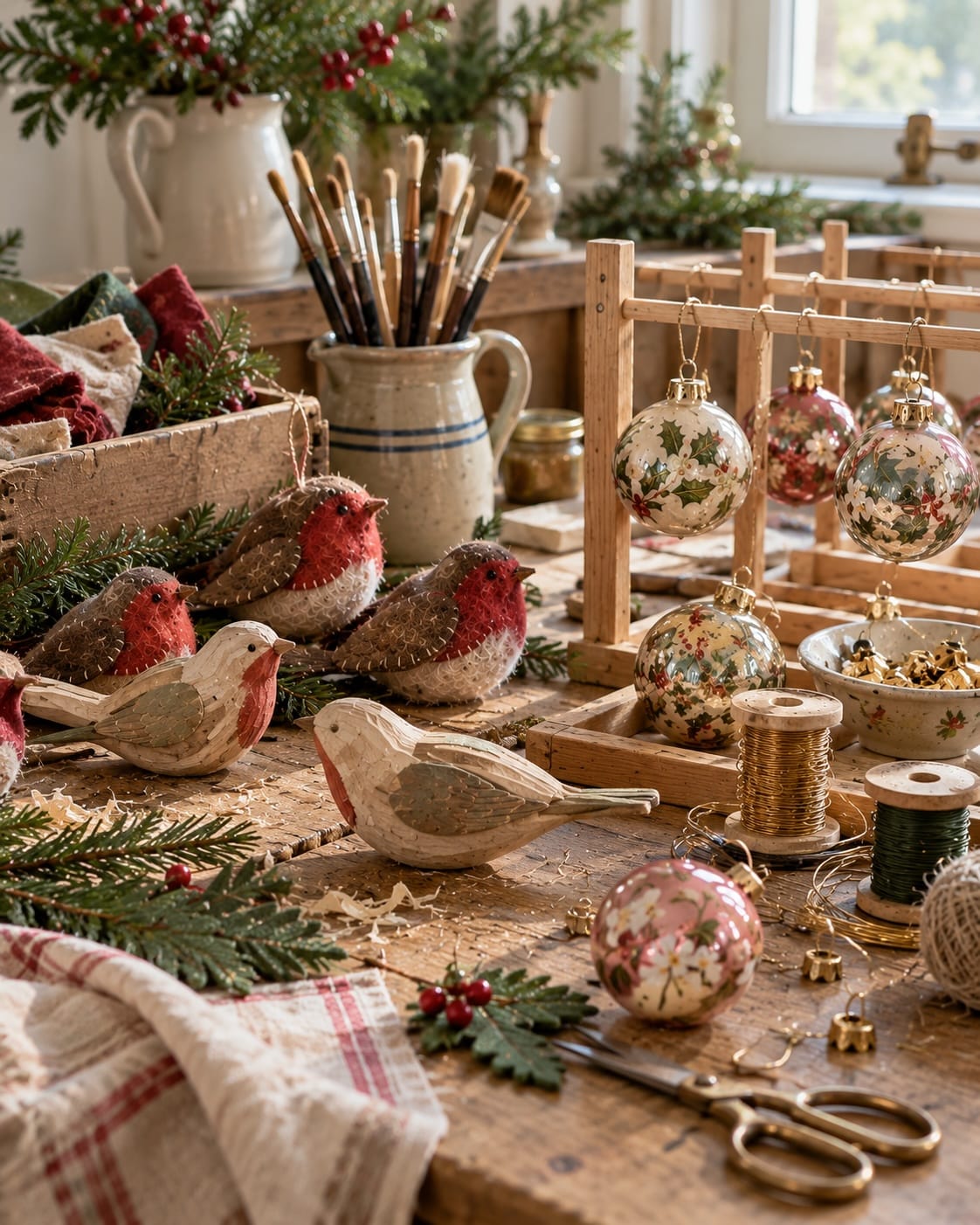
The second is somebody else's archive. Mercury glass from the fifties, hand-painted mid-century ornaments from half of Eastern Europe, the thin blown ones that weigh almost nothing and that you unwrap every December half expecting to find in pieces. They were made to go on a tree every year for a lifetime, and a surprising number of them have managed it.
The third way costs almost nothing. Charity shops put their Christmas shelf out from about the middle of November, and what goes on it has been accumulating in the back all year, which is how several houses' worth of decorations come to appear at once. It is not a cheerful thought, where some of those boxes come from. But those baubles were made for a tree rather than a cupboard, and somebody may as well put them on one.
Whichever of the three you use, the same test applies before you hand over any money, and it is not about taste. Will anybody be sad when this breaks? That is the only question that predicts whether a thing is still on the tree in fifteen years, because being missed is what stops it quietly getting replaced. If the answer is no, it is packaging rather than a decoration, and the tree does not need it.
Where to start
Handmade decorations → · Vintage glass baubles → · Charity shops, from about the middle of November
The box in the loft
The five remaining baubles from the matching set are still up there, in their original packaging, in a box marked CHRISTMAS 2 in somebody's handwriting. Somewhere beside it is CHRISTMAS 1, which is the box that comes down the ladder first, and nobody ever sat down and decided which things went in which. That is how the five came to be where they are. Nothing is wrong with them. They are undamaged and they were not cheap, and over about a decade they lost anyway to a star made of flour and salt by a child who is now old enough to have opinions about mortgages.
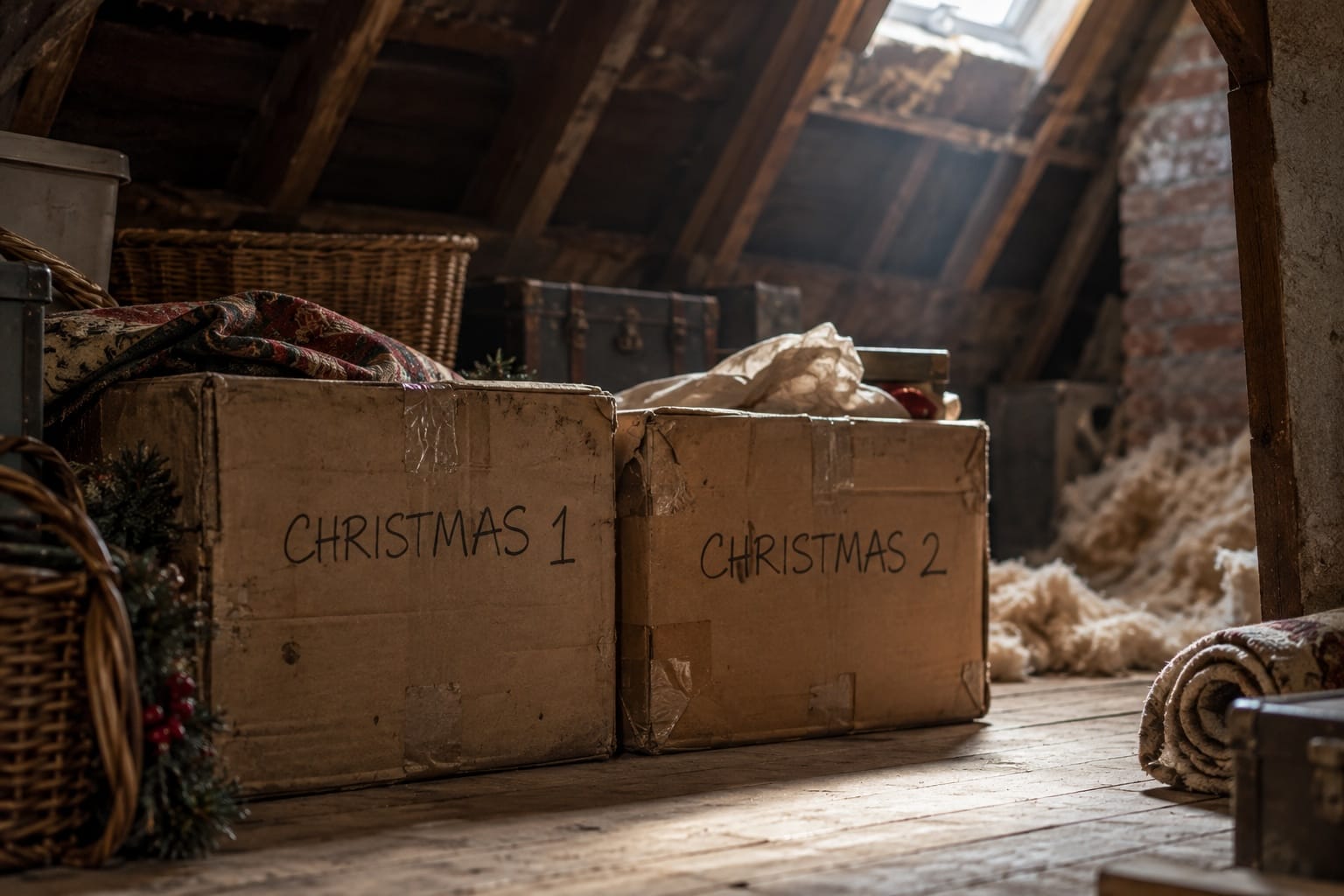
You could take them to the charity shop. You know you could.
You won't.
Some of the links in this post are affiliate links, which means I may earn a small commission if you buy through them, at no extra cost to you. Nothing on my own tree was bought through either of them, which is rather the point. More on that here.
📌 Pin this for later, ideally the week the box comes down.