The Village Fête, Explained
The poster has been in the post office window since May. The village fête, explained for the curious American.
(For everyone who has only ever seen one on Midsomer Murders.)
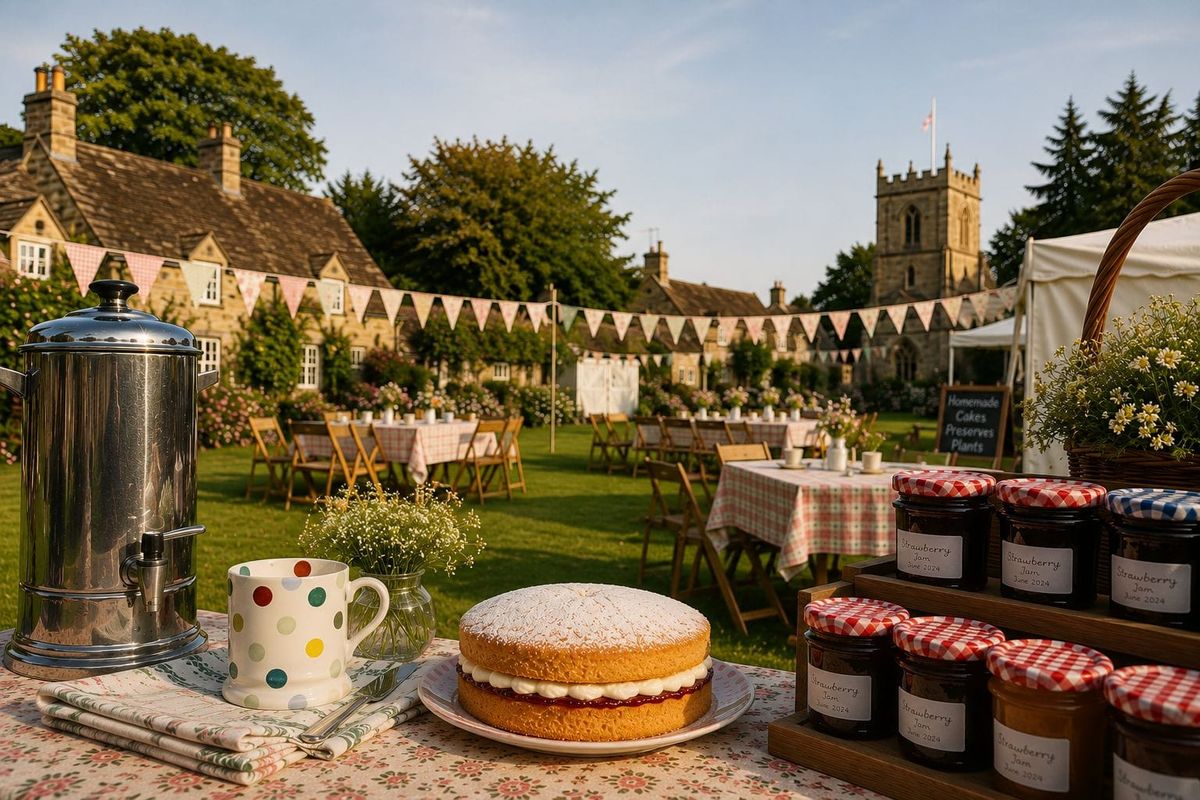
The poster went up in the post office window in May. It is A4, laminated against the inevitable, and it promises the following: a fête, the big field, two o'clock Saturday, bric-a-brac, a tombola, teas and a dog show. It does not explain any of these words. It assumes you know. If you grew up here, you do. If you are reading this in America, having absorbed the English village entirely through Midsomer Murders, you know the fête as the event at which the body is found. I am here to tell you what happens at the ones where nobody dies, which is most of them.
The first thing to understand is that a fête is not a festival, and it is certainly not a fair. It is a fundraiser, usually for the church roof, which has been about to fall in since 1974. It is organised by a committee of seven, of whom two do everything, and it is run with the logistical seriousness of a small military campaign that happens to involve cake. The objective is to raise several hundred pounds. The actual point is something else entirely, which I will come to.
By Friday evening the green has been dressed.
The bunting
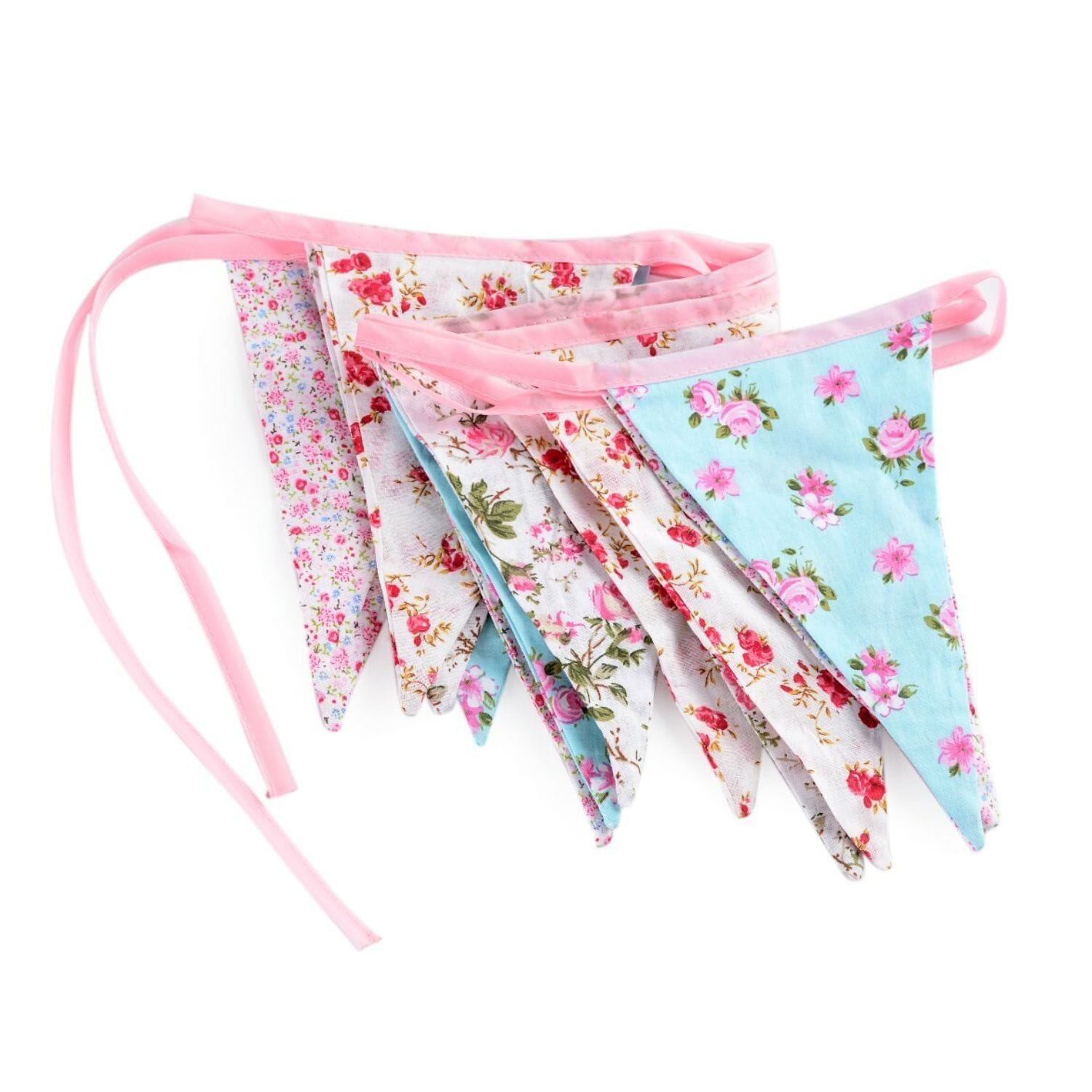
Vintage Bunting
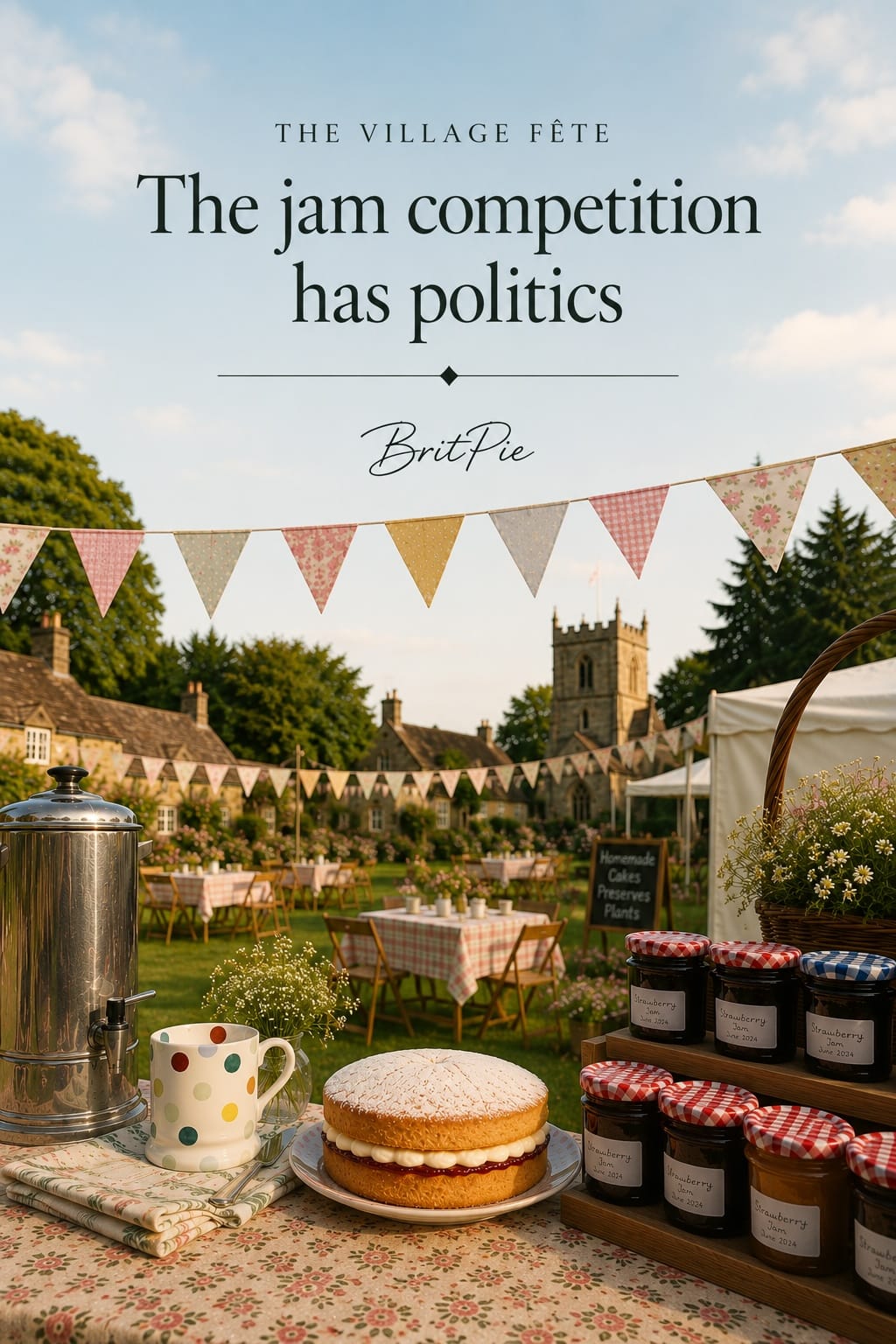
Nothing announces a fête like bunting, and no bunting announces it like the old sort: proper cloth triangles, faded by decades of Julys, strung between a lamp post and whatever else will hold still. The vintage kind surfaces on eBay in generous quantities, sold by people whose lofts have finally been cleared, and it hangs with an authority that new polyester cannot manage. Buy more than you think you need. Bunting is the one thing of which there has never, in recorded history, been too much.
Under the bunting, the institutions assemble. The tombola, for the uninitiated: a raffle in which every prize has been donated from the village's own cupboards, which means the same bottle of sherry has been in circulation since the Blair years, won, regifted, redonated and won again, like a relic making its rounds. The bric-a-brac table is an estate sale without the estate. The coconut shy is exactly what it sounds like, and harder than it looks.
And then there is the produce tent, where the true drama lives. The jam competition has politics. Somebody has won it eleven years running, and there is a school of thought, never spoken above a murmur, that her blackcurrant is bought in and rebadged. The Victoria sponges are judged on crumb, on lift and on the evenness of the jam line, by a woman who once judged at county level and has never let anyone forget it. Grown adults lose sleep over this. It is magnificent.
The jam jars
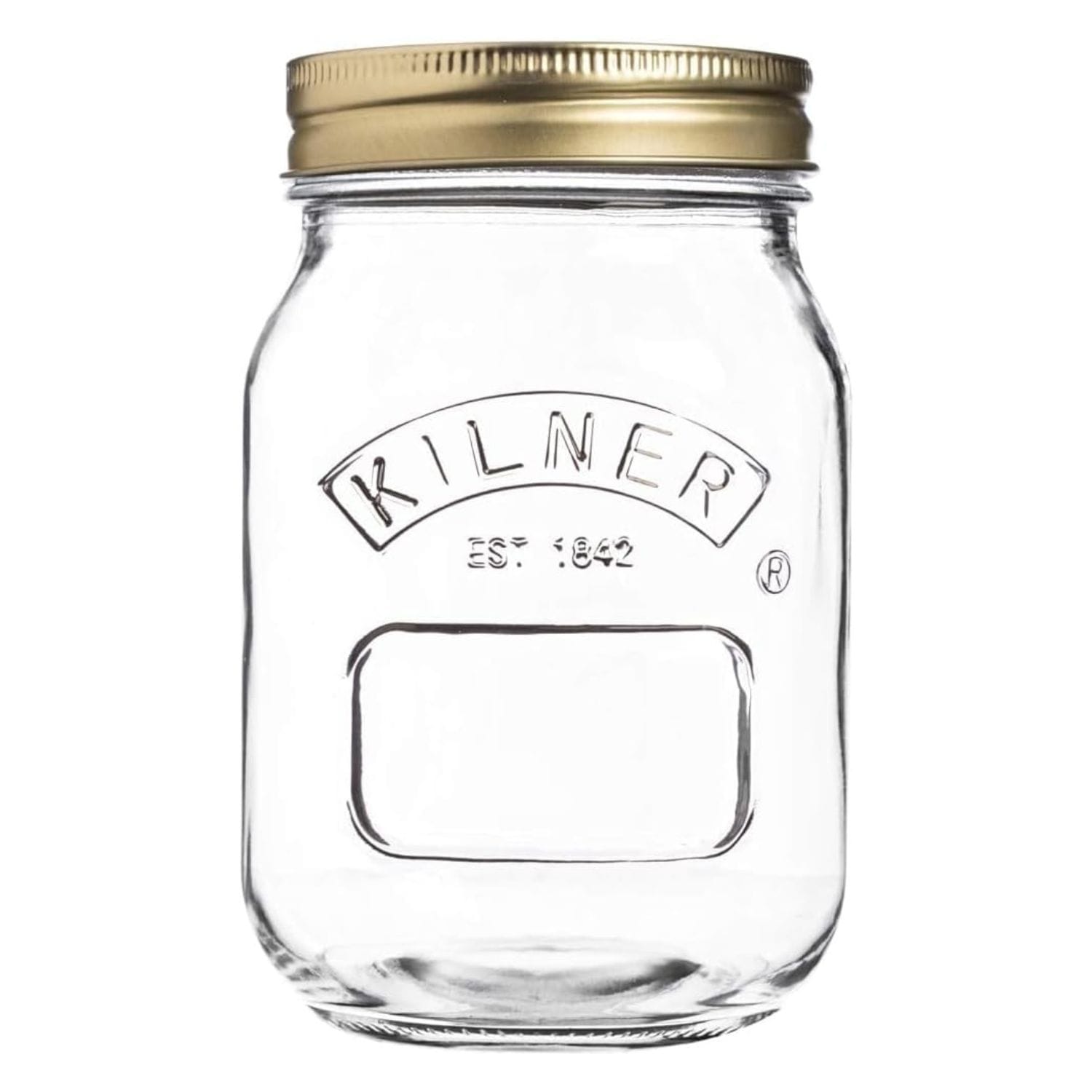
Kilner Twist-Top Jam Jars
Should you come home from all this with ambitions, and people do, the entry requirements are a saucepan, more sugar than feels responsible and proper jars. Kilner is the name on the proper ones. A batch of summer jam in a row of twist-top jars, labelled in your own handwriting, is one of the most quietly satisfying sights a kitchen can produce. Whether you then enter it into competition is between you and your conscience. Eleven-in-a-row started somewhere.
The tea tent
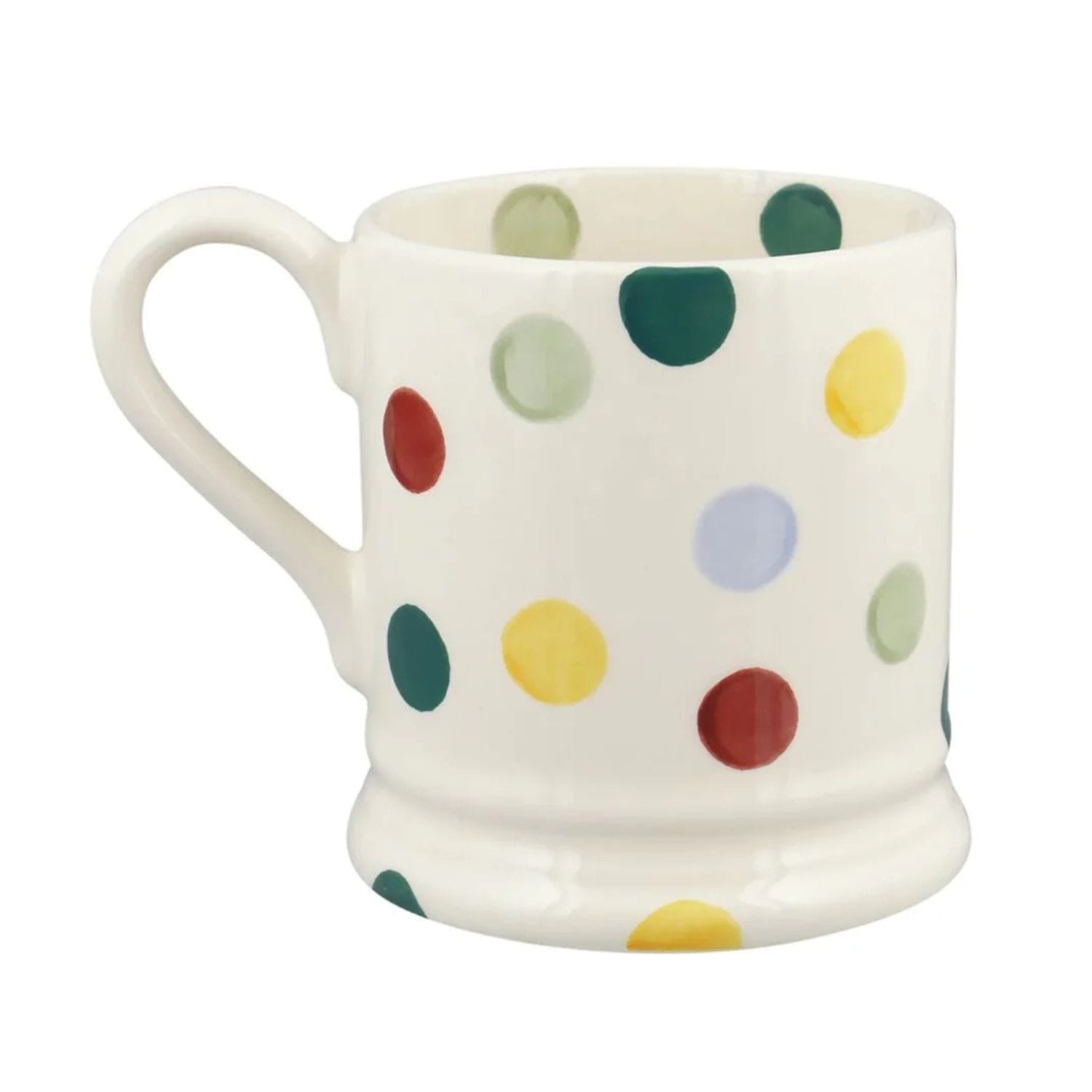
Emma Bridgewater Polka Dot ½ Pint Mug
The tea tent is the fête's beating heart and its high society. The urn goes on at one o'clock and does not go off until the last trestle is folded. And on the good tables, someone's best crockery has come out, because a fête runs on the principle that the everyday things should be the cheerful ones. Emma Bridgewater's polka dots have been doing cheerful institutional service since 2002, and a half pint of tea in one, drunk standing up while the dog show descends into chaos behind you, is the entire experience in miniature.
The dog show deserves a word. It has categories like Waggiest Tail and Dog Most Like Its Owner, every entrant wins something and at least one dog will steal a sausage roll from the cake table in an incident that will be discussed until Christmas. The vicar commentates on all of it through a PA system bought in 1988, at a volume the PA cannot deliver and the vicar can.
At about four o'clock somebody counts the takings in the back of the hall: four hundred and twelve pounds and thirty-seven pence, roughly what the committee spent on insurance. This is announced as a triumph, because it is one. The roof was never really the point. The point is that for one Saturday afternoon the whole village stood in a field together, argued about jam, overpaid for someone else's teapot and went home sunburnt in the specifically British way, which is to say on one arm.
And the jam competition? Won, for the twelfth consecutive year, by the usual suspect. The murmuring has already begun about next summer. If you are ever in England in July, find the poster, find the field and bring change for the tombola. The body count, I promise, is usually nil.
This post contains affiliate links, which means I may earn a small commission if you buy through them, at no extra cost to you. I only recommend things I would genuinely give house room, or in this case a trestle table. Full disclosure.
📌 Pin this for later, for planning an English summer, or for explaining to anyone back home what it is you love about this place.